On this page
Two different batteries live in a garage door setup, and people mix them up on the phone every week. One is the coin cell inside the handheld remote; when it dies the door still works from the wall button. The other is the backup battery pack on the opener itself, the part this guide is about: a rechargeable battery that keeps the motor running when the power goes off at the street. If you searched for a battery garage door opener meaning a remote battery, the small cells sit in our batteries, globes and lubricants range. If you want the door to keep working in a blackout, read on.
What is a garage door opener battery backup, and how does it work?
An opener runs on mains power through a plug in the ceiling. A battery backup sits between that supply and the motor. While the power is on, the opener trickle-charges the battery and ignores it. The moment the mains drop out, the opener switches to the battery on its own, and the remote, the wall button and the safety beams carry on as normal. Many openers slow the door a little on battery to stretch the charge, and most tell you they are on backup with a light or a beep. When the power returns the opener goes back to mains and tops the battery up.
The pack is usually a sealed lead-acid battery, or a lithium pack on some newer units, sized to run the motor for a handful of door movements rather than for days. It powers the opener only. The springs still do the heavy lifting, which matters later in this guide.
Is a battery backup worth adding to your opener?
It depends on what a power cut costs you. Perth loses power more often than people expect: summer storms, pole work along the older streets in Morley and Midland, and the odd heatwave afternoon when the grid struggles. For most households an outage is an inconvenience and the manual release cord is enough. A backup earns its place when one of the following is true.
- The garage is the only way into the house. Plenty of newer homes in Baldivis, Ellenbrook and Yanchep have no side gate and a front door that locks from inside, so a dead opener means a locked-out family.
- Someone in the house cannot lift a door by hand. A balanced sectional door is light, but it is still a two-handed lift above head height, and a roller door curtain is awkward on a bad shoulder.
- You leave before dawn or get home late. Fumbling with a release cord in the dark, in a storm, is when people hurt themselves or bend the door.
- You are buying a new opener anyway. Many of the openers we supply and install across Perth either include a backup or accept one, and it is simpler to fit it on the day than come back later.
If none of those apply, learn the release cord and put the money towards a service. A well-balanced door with a working release is a fine answer to a blackout that happens once a year.
How long does a backup battery last, and how many door cycles will it give you?
There are two questions in there. The first is how long a charged pack will run the opener in an outage. That comes down to the size of the battery and how often you use the door, and every manufacturer publishes its own rating, usually as a number of open-and-close cycles within a set number of hours of the power going off. Look up the figure for your model rather than trusting a general number, and treat it as a best case measured on a balanced door in mild conditions. Expect fewer cycles from a tired pack, a heavy door or a hot garage.
The second question is how many years the pack lasts before it needs replacing. Sealed lead-acid batteries age whether or not they are used, and heat speeds that up; a garage under a Colorbond roof in Canning Vale in February sits well above the temperature the battery would like. A few years of service is typical, the opener usually warns you when the charge has dropped too far, and the section on replacement below covers the signs.
A backup does not fix a heavy door
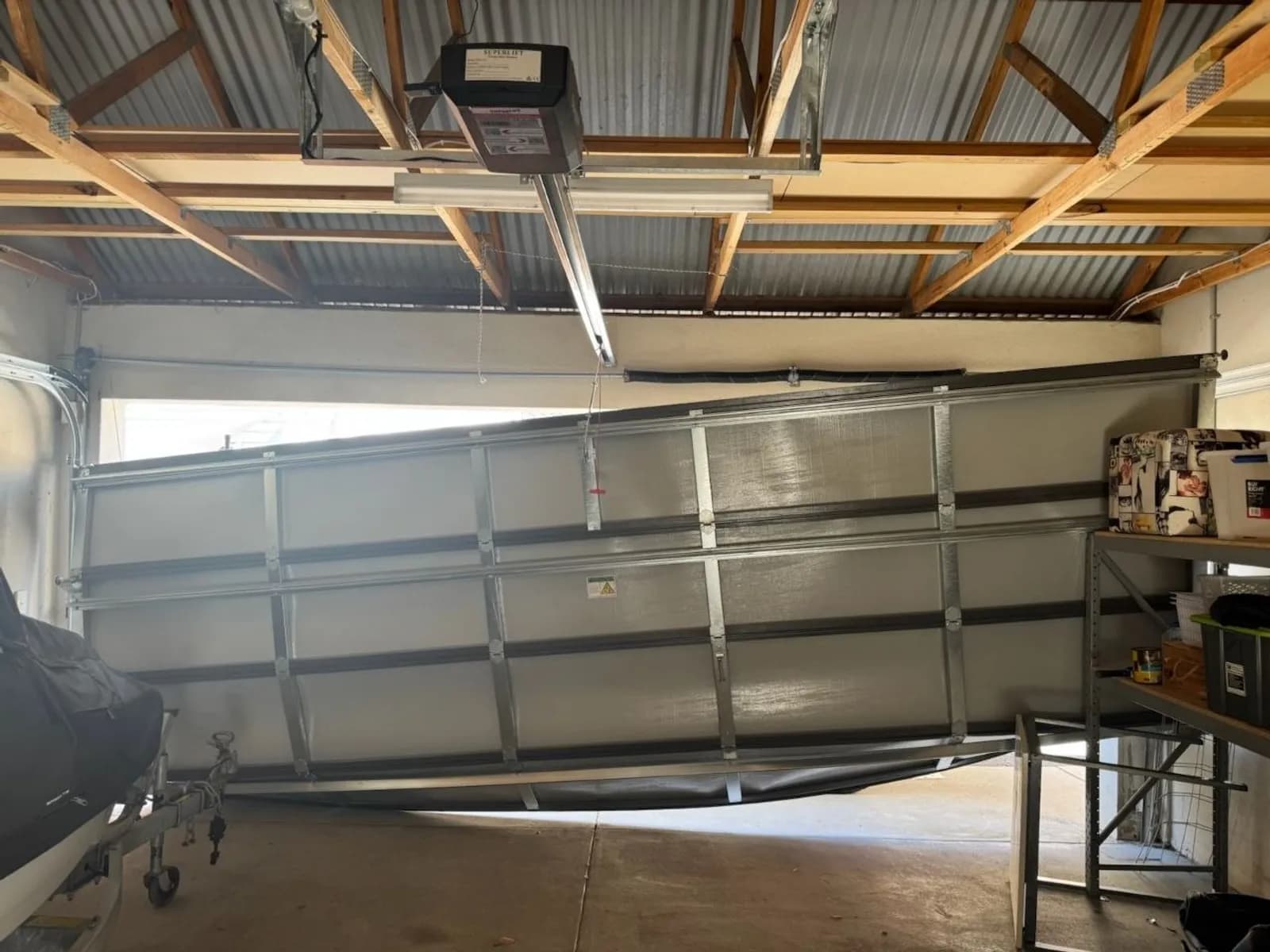
The battery runs the motor; the springs carry the weight. If the door is out of balance because the springs have lost tension, the motor works much harder, the pack drains in a fraction of the rated cycles, and the door can stall half-way on battery. If your opener strains or the door drifts when released, get the springs looked at before you spend money on a backup.
Which openers can have a battery backup fitted?
This is brand- and model-specific, so check before you buy anything. As a rough guide, current openers from Merlin, B&D and Superlift generally offer a battery backup, either built in or as an optional plug-in module for their compatible models; Steel-Line and Jaytech openers vary by model; and older units from any brand, particularly the chain-drive openers fitted through the 1990s and 2000s in estates like Joondalup, usually have no port for one. A module only works with the opener it was designed for, because the plug, the voltage and the charging circuit are matched to that motor. Read the model number off the label on the head unit and check it against the manufacturer's compatibility list, or send it to us. Compatible packs sit in our opener spare parts and accessories range alongside key releases and replacement boards.
If the opener has no port, the honest options are a new opener with backup built in, or living with the release cord. We would rather say so plainly than sell an accessory that will not plug in.
Built-in backup or an add-on unit: what is the difference?
A built-in backup ships inside the opener. The battery lives in a compartment in the head unit, the main board handles the charging, and the only sign it is there is a status light and a beep during an outage. When the battery ages you swap the cell inside the housing. An add-on unit is a separate module for an opener designed to accept one: a small box that plugs into a socket on the head unit and mounts beside it on the ceiling or rail bracket. It does the same job and can be fitted years after the opener went in, which is the usual route once the first blackout has made the need obvious. Either type can be fitted while we are up the ladder repairing or servicing an opener, which saves a separate visit.
Some people plug the opener into a computer-style uninterruptible power supply instead. It can work, but a small office UPS may not cope with the current the motor draws on start-up, and it bypasses the opener's own low-battery warnings. Check the opener's rated draw and the manufacturer's advice first, and test it properly rather than trusting it on the night.
Do you need to reprogram your remotes after a backup battery is fitted or replaced?
Usually not. Remote codes, travel limits and force settings are stored in memory on the opener's main board, not in the battery, and they survive with the power off. Unplugging the opener to fit a module, or swapping the cell inside the housing, should leave every remote working as before. The exception is an older opener, or one that had its board replaced on the same visit; a few of those want the travel limits set again after a full power loss, and the manual for the model will say so. If a remote does stop working after the job, the cause is almost always a flat remote cell or a learn button pressed by accident, not the backup.
What should you do during a power outage if you don't have a backup?
Use the manual release. With the door fully closed, switch the opener off at the wall if you can reach it, pull the red cord hanging from the trolley so the door is free of the motor, and lift the door by hand; on a roller door the release is a cord or lever on the motor at the end of the drum. A balanced door lifts easily and stays up on its own. Our step-by-step guide to opening a garage door by hand when the power is out covers roller doors, key releases for opening from outside, locking up afterwards and re-engaging the motor. If the door feels very heavy or wants to drop, stop and ring us; that is a spring or cable fault, not something you should be fighting.
When should a backup battery be replaced?
Do not wait for the blackout to find out the pack is flat. A backup battery is a consumable, and the signs it is on the way out are easy to spot if you look for them.
- The opener's battery light changes colour or flashes, or the unit gives a repeating beep with the power on. Most openers use that warning for a battery too old to hold charge.
- The door runs noticeably slower on battery than it used to, or manages fewer movements in a test before it gives up.
- The pack is swollen, warm to the touch or smells of sulphur. Disconnect it and replace it; a damaged lead-acid battery should not stay on the ceiling.
- It is several years old. Even an unused pack ages on the shelf, so check the date on the label or ask when it was fitted.
Testing the backup a few times a year
- Close the door fully, then switch the opener off at the power point so it is running on battery alone.
- Open and close the door from the remote and again from the wall button, and listen for the beep that says the opener knows it is on backup.
- Watch the door's speed. A big drop from the previous test means the pack is losing capacity.
- Switch the power back on and confirm the battery light returns to normal after a few hours of charging.
- Write the date on a piece of tape on the head unit so the next person knows when the pack was checked.
Replacing the pack means fitting the type the opener was designed for, connecting it the right way round, and taking the old lead-acid battery to a council drop-off rather than the bin. It is a quick job for us during a service, and we carry common packs on the vans. As always, there is no call-out fee, the quote is free, and we price the work before we start.