On this page
A garage door that ignores the remote is usually a power cut, a flat remote battery or a fault in the opener, and none of those has to keep the car in. Every automatic opener has a manual release that unhooks the door from the motor so you can lift it by hand, but it is only safe on a door that is otherwise in good order. This guide covers how to open a garage door manually, and when to leave the cord alone and ring us.
What does the red cord on a garage door do?
On a sectional or tilt door the opener sits on a rail that runs from above the door back to the motor head. A trolley travels along that rail, joined to the top of the door by a short arm, and the red cord hangs from that trolley. Pull it and a lever unhooks the trolley from the chain or belt, so the motor no longer drives the door. Manuals call it the manual release, emergency release or manual override: one part, three names. The springs and cables that carry the door's weight are untouched, which is why a healthy door still feels light with the motor out of the picture, and why a door with a broken spring is dangerous the moment you pull the cord.
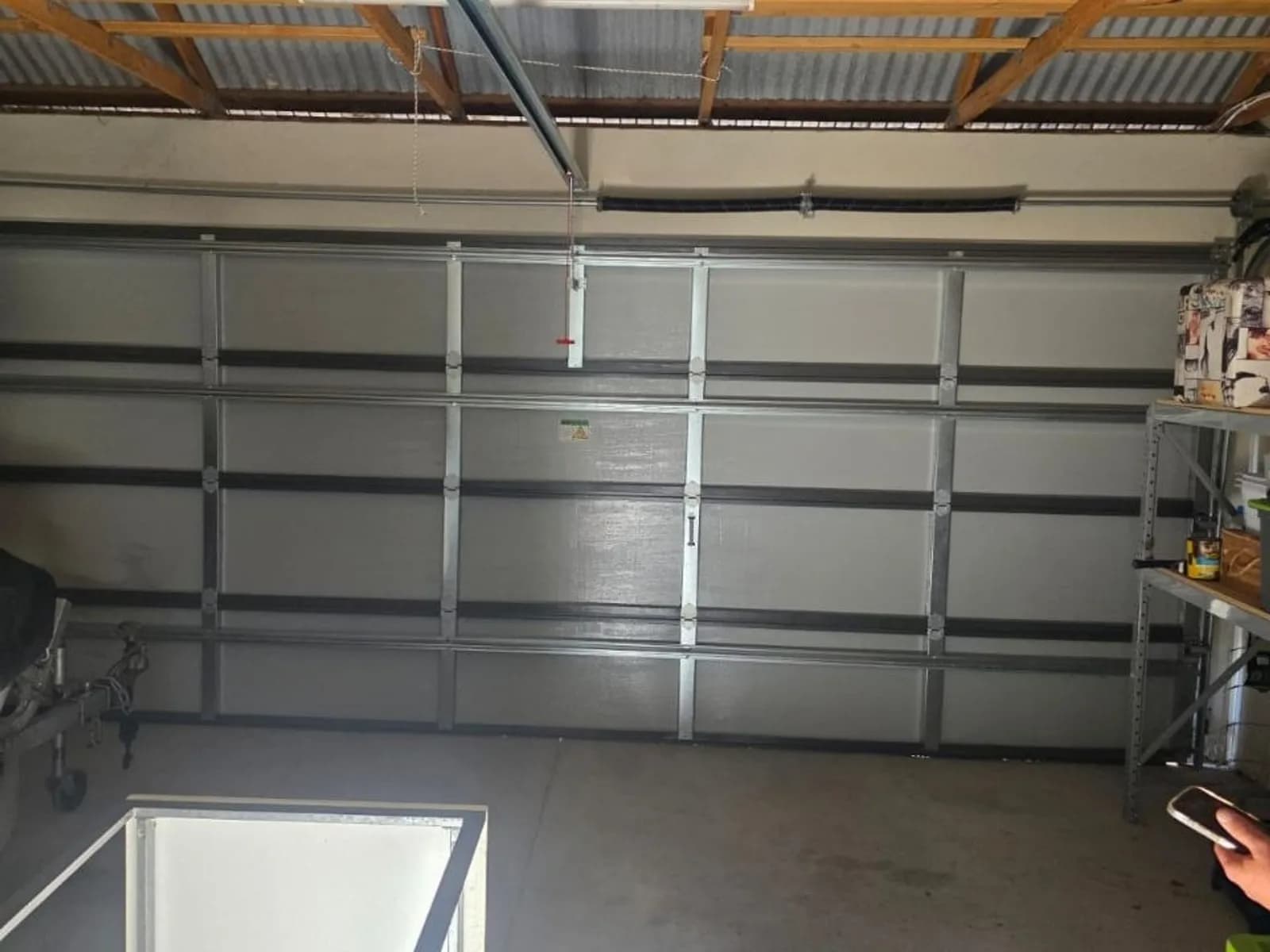
How do you open a garage door manually, step by step?
These steps suit sectional and tilt doors with an overhead opener; roller doors are covered further down. Run the checks first, every time.
Before you pull the cord
- Look at the door. If it hangs crooked, a cable is slack or dangling, or there is a gap in the coil spring above the door, stop here and call instead.
- Make sure the door is fully closed. A door stopped part-way has a reason, and releasing it can let it drop.
- Keep children, pets and the car's bonnet out of the doorway until the door is open and holding.
- Switch the opener off at the power point if you can reach it, so it cannot start while your hands are on the door.
- Find the cord. It hangs from the trolley on the rail, usually with a red handle, within reach from the floor in most garages.
- Stand to one side under the rail and pull the cord firmly downwards. On many openers, Merlin among them, pulling it down and back towards the motor locks the trolley in the released position; the direction varies by brand, so check the manual.
- Take the door by its handle or the bottom edge, never by the joints between panels, and lift with your legs. A balanced door rises smoothly and takes two hands, not a struggle.
- Raise it all the way up and check that it stays there before you let go. If it drifts down, keep hold of it and have someone else move the car; do not prop it up with anything.
- If the door feels heavy, sticks part-way or wants to slam down, lower it gently to the floor and stop. That is a spring or cable problem, and a harder lift makes it worse.
- Once the car is out, bring the door back down by hand and lock it before you leave; closing is covered below.
A heavy door is a broken door
The springs carry the door's weight, not the motor. If the door feels far heavier than you expected, or sinks when you take your hands off, a spring or cable has failed and the door is dead weight. Set it down, keep everyone clear, and leave the springs and cables alone; they are under tension and are not a DIY job.
How do you open a roller door manually?
A roller door has no rail and no trolley. The motor sits at one end of the drum, and the release is on the motor itself: a cord or a small lever that takes the drive out of gear. On some units the cord hangs within reach of the floor; on others you need a step ladder, and on a few the lever must be latched rather than just pulled, so check the label on the motor or the manual, or ask us: we supply, install and service Steel-Line and B&D roller doors and repair other makes. Once released, take the bottom rail with both hands, keep your fingers out of the side tracks, and lift the curtain to the top; the springs inside the drum carry most of the weight. If it is stiff, lopsided or rattles back down when you let go, stop: that points to tired drum springs or a curtain out of its guides, and forcing it creases the curtain.
Can you open a garage door manually from outside?
Only if it has an outside release fitted, or you have another way in. If the garage has an internal door to the house, go in that way and pull the cord from inside. Where the garage is the only way in, look for a small round key lock in the top panel of a sectional door, on the face of a tilt door, or in the curtain of a roller door. That is an emergency key release: turn the key, draw the barrel out, and the short cable behind it trips the same lever the cord does; then lift the door by hand as above. If there is no key lock, do not lever the door up from outside. It is still hooked to the opener, and forcing it bends the top panel, strains the door arm and can strip the drive gear. We attend stuck and locked-out doors around the clock across Perth with no call-out fee, and can fit a key release while we are there so the next outage is a two-minute job.
How do you close and lock the door with no power?
Closing is the same job in reverse, with the door still released. Take the handle or the bottom edge, keep your fingers clear of the panel joints, and walk the door down until it sits on the floor; a tilt door swings out as it comes down, so stand to one side. Then lock it, because a released door lifts from outside as easily as it did for you. Sectional doors usually have a slide bolt on the inside of one track, or a hole in the track just above a roller that takes a padlock. Roller doors have bolts at each end of the bottom rail, or a key lock in the middle that throws both. Whatever you used, take it off before the opener goes back into service, because a motor pulling against a bolt strips gears and buckles panels.
How do you get the garage door out of manual mode?
Manual mode is just a trolley that is not hooked to the door, so the fix is reconnecting the two. Undo any bolt or padlock first. On Merlin and similar openers, pull the cord down and towards the door so the lever clicks back to its normal position, then press the wall button or remote; the trolley runs along the rail until it meets the door arm and snaps in. On other units you move the door by hand until the trolley and the arm line up and latch with a click, and a few older ones re-engage themselves on the next run; the manual for your model says which. On a roller door, push the lever back or pull the cord the opposite way, then run the motor. If the motor runs and the door stays still, the trolley has not caught: stop, close the door fully by hand and try once more. If it still will not engage, the trolley or drive gear may be damaged, and that is a job for our opener repair service, not something to force.
When should you not pull the release?
The release is safe on a healthy door. On a damaged one it turns a stuck door into a falling one. Leave the cord alone and ring us if you see any of these.
- A broken spring. You may have heard a bang from the garage, and there is a gap in the coil spring above the door or an extension spring hanging loose beside the track. The motor has been holding the whole door; release it and nothing holds it up. We treat a broken spring as a same-day repair, and the springs themselves are never something to touch.
- A cable off its drum or snapped. The door sits crooked or a cable is dangling. Release it and the good side runs while the bad side jams or drops. Read how we refit and replace cables with the door held safely.
- A jammed or off-track door. Rollers out of the track, a bent hinge or a panel caught on something. Muscle bends more panels; the door needs to be freed, not forced.
- A door stopped part-way. Whatever stopped it is still there, and once released the door can slide down on its own. Leave it where it is, keep clear underneath, and read through the reasons a garage door will not open while you wait for us.
If the door is closed and the opener is simply dead, with no light and no response from the remote or the wall button, the release is the right tool once the checks above are done. If anything about the door itself looks wrong, ring us: the quote is free, there is no call-out fee, and we are available 24/7, 365 days a year, across Perth, north and south of the river.
How do you stop it happening again?
Perth's summer storms and the odd heatwave outage take the power out when everyone wants the car. The fix is a battery backup on the opener. Many current openers from Merlin, B&D, ATA and others take a plug-in battery module that gives you a set number of open-and-close cycles while the mains are down and recharges when the power returns. Older openers, common in the 1990s and 2000s estates around Canning Vale, Joondalup and Ellenbrook, usually have nowhere to plug one in; if the garage is your only way in, a new opener with backup built in is the fix. Backup batteries wear out even unused, so test yours a few times a year with the opener switched off at the wall, and replace it when the cycles drop off or the opener starts beeping. Battery backup modules and external key releases sit in our opener spare parts and accessories range; tell us the opener model and we will say whether yours takes one.