On this page
A garage door seal is a small part with a big job. It is the strip of rubber, PVC or bristle that fills the gap between a steel door and a floor that is never quite flat and a frame that is never quite square. When it works you do not notice it. When it fails, you notice the puddle, the line of sand along the inside of the door and the daylight under the bottom rail. This guide covers what the seals do, the types that exist, how to work out which one your door takes, and what to do when one has had it.
What does a garage door seal actually do?
It closes the gaps the door cannot close on its own. A garage door is a rigid panel or curtain moving in a rigid frame, and it needs clearance around it or it would bind. The seals take up that clearance with something soft, and a set in good condition does four things at once.
- Keeps water out. Rain driven against the door by a winter north-westerly runs down the face and, with no seal, straight under the bottom rail and across the slab.
- Keeps sand, dust and leaves out. In Perth this is the one most people notice: a fine line of sand inside the door after every easterly.
- Keeps pests out. Mice, cockroaches, spiders and the occasional frog or reptile come in under a lifted corner of a bottom seal more often than through any other gap in the house.
- Cuts draughts and noise. Hot air in summer, cold air in winter and the neighbour's mower all come around the door before they come through it.
What a seal does not do is insulate the door itself. Heat coming through a bare steel panel on a hot afternoon is a different problem with a different fix, and our guide to garage door insulation explains where the two overlap and where they do not.
What types of garage door seal are there?
Four positions, and a handful of designs for each. Most garages only ever need the first one replaced, but it helps to know what the others are called when you are looking at a gap.
- Bottom seal. The weather seal along the bottom edge of the door. On a sectional door it is usually a soft rubber or PVC strip with a bulb or U-shaped section that slides into a channel on the bottom panel and squashes against the slab. On a roller door it is a flat or bulb strip held in the bottom rail. It wears fastest and matters most.
- Threshold seal. A raised rubber ramp glued to the floor across the opening so the bottom seal lands on a level, sealed ridge instead of rough concrete. Used where the slab has dropped, cracked or slopes toward the garage.
- Side seals. A flexible PVC or rubber fin, or a nylon brush strip in an aluminium holder, screwed to the frame or the track angle so it lies against the face of the door. Brush strips are the common choice because they forgive an uneven gap and shed sand.
- Top or header seal. A fin or brush along the lintel that meets the top of a sectional door when it closes. On a roller door the top gap is normally covered by a pelmet or hood over the roll rather than a seal.
- Ember and bushfire seals. Brush and fin seals made to a bushfire rating for homes in the hills and on the urban fringe. If the house has a bushfire attack level on its approval, check what the door opening must have before choosing a seal.
How do you know which seal your door needs?
Measure; do not guess from a photo on a website. Seals look alike in a listing and behave very differently once cut to length and pushed into a channel made for a different profile. Work through the door in this order and write the answers down before you buy anything.
- Identify the door type: roller, sectional (panel-lift) or tilt. Each holds its bottom seal differently.
- Look at how the existing bottom seal is held: slide-in channel, clipped into an extrusion, screwed through, or glued. If there is a channel, photograph its end-on shape; the seal has to match that shape, not the door brand.
- Measure the width of the door across the bottom edge. Seals are cut to length, and a strip short by a hand's width is useless.
- Measure the gap between the door and the slab at both ends and in the middle, door closed. Slabs slope for drainage and settle with age, and the biggest gap decides whether a standard bottom seal will do or a taller seal or threshold is needed.
- Check the sides and top the same way. Daylight down a side wants a brush or fin; a gap at the top of a sectional door wants a header seal; a gap above a roller door wants a pelmet.
- Cut a short piece off the old seal and keep it. That offcut answers most questions in one look.
If the gap is large on one side only, or the bottom edge sits crooked, stop before buying a seal. A door that has dropped at one corner has a cable, spring or track problem, and no seal will follow it. Fix the door, then seal it. Once you know the profile and the length, the bottom, side and top seals we stock cover the common channels on roller and sectional doors, and if yours is an odd one, send the photos and we will tell you what it is.
What are the signs your seals have failed?
Most people find out from the floor rather than from the seal. Look for these.
A seal has had it when you see
- Daylight under the door or down one side when you stand inside with the door closed and the lights off. This is the quickest test there is.
- A puddle or a wet arc across the slab after rain, or a tide line of dust where water has dried.
- Sand and leaves piled along the inside of the bottom rail, or drifting further in on windy days.
- A bottom seal that has gone hard and flat, cracked where it used to flex, or shrunk back from the ends of the door and left a bare corner.
- Brush strips with bristles worn short, bent flat or missing in patches, usually low down where sand blasts them.
- Cobwebs, insect husks and mouse droppings collecting at one end of the door, which tells you where the gap is.
Can you replace a garage door seal yourself?
Usually, yes, and it is one of the few garage door jobs we are happy to see a homeowner do. Seals sit away from the springs and cables, they need hand tools rather than winding bars, and getting one slightly wrong makes a draught rather than a hospital visit. How to replace a garage door seal depends on where it sits; follow the instructions that come with the seal you buy if they differ from the outline below.
- Switch the opener off at the power point so nobody can start the door from a remote while your hands are on it.
- Slide-in bottom seal on a sectional door: raise the door far enough to reach the bottom panel, lock it or clamp the track so it cannot move, and pull the old seal out of the channel from one end. Clean the channel, wet the new seal with soapy water, feed it through, and trim it once it has settled.
- Roller door bottom seal: lower the door until the bottom rail is at a workable height, lock or clamp it, and slide the old strip out of the rail and the new one in, again with soapy water rather than oil.
- Side and top brush or fin seals: hold the strip against the frame with the bristles or fin just touching the door face, mark, drill and fix. Too much pressure makes the door drag; too little leaves the gap.
- Threshold seal: scrub the slab, let it dry completely, close the door, position the threshold so the bottom seal lands squarely on it, and glue it with the adhesive the maker recommends. Keep the car off it until it has cured.
- Power up and run the door through a few full cycles. It should close fully, sit evenly on the new seal, and still reverse when it meets an obstruction. If it now stops short of the floor, the opener's close limit may need a small adjustment; check the opener manual.
Stay away from the bottom brackets, cables and springs
The bottom seal on a sectional door runs right past the bottom brackets, which anchor the lifting cables under full spring tension. Do not loosen those bolts to get at the seal, and do not unhook a cable to make room. If the seal cannot be changed without touching them, call us rather than push on.
Two cases where we would rather do it: a tilt door with a perished bottom seal often needs the panel edge repaired at the same time, and a commercial roller door in Osborne Park or Welshpool is too heavy and too high to work on from a stepladder. Seals are also looked over as part of the full garage door service we do across Perth, and a worn one can be changed while the door is already being worked on.
Roller door seals vs sectional and tilt door seals: what is different?
The door type decides where the seal goes and how it is held, which is why a roller door seal and a sectional door seal are rarely interchangeable even when they look alike in the packet.
A roller door is a corrugated steel curtain running in two side guides. The bottom rail stiffens the curtain and carries the rubber strip, so the roller door seal is usually a flat or bulb strip that slides into that rail. The guides already partly close the sides, and a brush strip fixed to the guide closes the rest; a pelmet covers the top. Some older curtains among the roller doors we supply and repair across Perth have a plain bottom rail with no channel at all, and on those a seal is screwed or riveted on, or the rail is swapped for one that takes a slide-in strip.
A sectional door has the most seal positions: a bottom seal in a channel on the lowest panel, side seals on the frame or track angle, a header seal along the lintel and, on some doors, soft joints between panels. Its bottom seal also copes with the biggest range of gaps, because the panel is flat and the slab under it is not, which is why sectional bottom seals come in several heights and a threshold is sometimes the right answer.
A tilt door swings out and up as one panel, so it never presses straight down on the floor. Its bottom seal is usually a fin screwed to the bottom edge that wipes the slab as the door closes, with fin seals on the frame for the sides and top. Tilt doors on older brick-and-tile homes in Morley, Midland and Armadale are the ones most likely to have no seals at all.
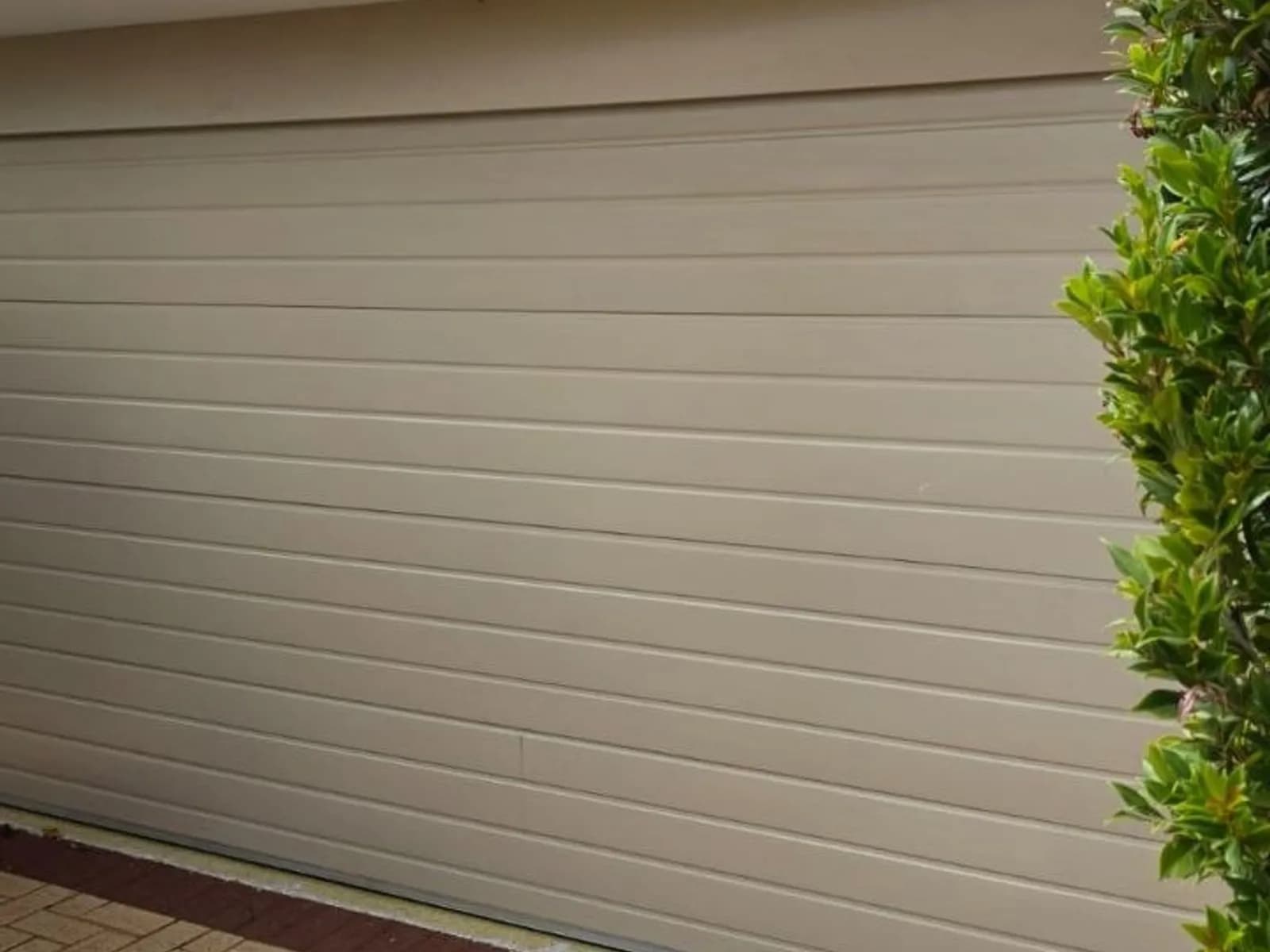
How does Perth's coastal climate wear seals faster?
Seals are soft materials, and Perth is hard on soft materials. Three things do most of the damage, and a door in Scarborough, Hillarys or Fremantle gets all of them.
- Sun. A west- or north-facing door sits in direct sun through the hottest part of the day for most of the year. Ultraviolet light and heat harden rubber and PVC, and the strip that flexed against the slab when new ends up as hard as the concrete it is meant to seal against. Cracks follow.
- Sand. Wind-blown sand works under the bottom seal and between the brush bristles and the door, and every cycle drags it across the seal like sandpaper. A bottom seal on a sandy verge in Yanchep or Baldivis wears through where one on a paved inner-suburb street would not.
- Salt. The sea breeze carries salt onto everything within a few kilometres of the coast. It does not attack rubber the way it attacks springs and cables, but it corrodes the aluminium channels and steel screws that hold seals in place, and a seal whose holder has crumbled is as good as no seal.
Winter adds the water: a north-westerly front drives rain against the door for hours, and a seal that has shrunk back from a corner lets it straight in. Inland, in Midland or Ellenbrook, the salt drops away but the sun and the sand do not, and the summer easterlies that push heat and dust under a tired bottom seal are worse the further east you go.
How often should seals be checked or replaced?
Look at them twice a year, and replace them when they fail the checks above rather than on a calendar. There is no fixed lifespan for a seal: the same strip that lasts many years on a shaded south-facing door in Canning Vale can be hard and cracked in a fraction of that time on a west-facing coastal door. What you can do is slow it down.
Twice a year, autumn and spring
- Close the door, turn the lights off and look for daylight along the bottom, the sides and the top.
- Press the bottom seal with a thumb. It should give and spring back. If it feels like a garden hose left in the sun, it is due.
- Sweep or vacuum the sand out from under the door and along the guides, and near the coast hose the seals and bottom rail down with fresh water.
- Wipe rubber and PVC seals with a rubber-safe silicone spray, never oil or petroleum grease, which swell and soften them.
- Check that brush strips still touch the door face and that their screws have not rusted loose.
Seal checks fit naturally alongside the rest of the door's maintenance, and our article on how often a garage door should be serviced sets out the full routine and the interval that suits coastal homes. If you would rather we did it, garage door seal work in Perth is a small job for us: we are based in West Perth, cover every suburb north and south of the river, carry the common seal profiles in the vans, charge no call-out fee, and price the job before we start.